
Puzzles in escape rooms – what are they like?
Logic, observation and teamwork — what the puzzles really test.
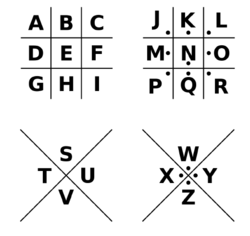
Do you need to be good at maths in an escape room? Do you have to be really clever to get out of the room? – these are yet more questions we answer every day at EscapeTartu. In this post we’ll talk a little about the puzzles used in escape rooms, to give you a quick overview.
Types of puzzles
Escape rooms use puzzles of many different kinds. Some of the more popular ones are, for example:
1) searching for hidden objects;
2) counting;
3) noticing something in the room;
4) using an object in an unusual way;
5) putting things together;
6) other puzzles.
In reality the list is endless, and it also depends a lot on the creators of the escape room.
A great many puzzles have to be done as a team (so-called cooperation puzzles). These are very good for developing teamwork skills. For example, one person has to do something in one room and another person in a different room, and their actions combined produce a result.
Difficulty levels of puzzles
The difficulty of a puzzle depends a lot on how many different objects or pieces of information have to be brought together to get or work out the result. The easier ones are those where you need to combine 1-2 different things or pieces of information, the harder ones those with 3 or more.
While in the beginning puzzles were generally on paper and had to be solved with pencil and paper, and sometimes torches, that quickly became history.
Before long, all kinds of padlocks appeared in escape rooms, to be opened with a key or code you had found. Anyone who has played EscapeTartu’s escape rooms will be familiar with ordinary padlocks, combination padlocks, directional locks and so on.
Next came various kinds of programmable technology, magnetic locks and computers. Today it is common for escape rooms to use microcontrollers, tablets, smartphones and other tech devices. In the world’s bigger cities there are escape rooms where electric motors move the walls, ceilings and floors.
Thanks to technology, it is possible to create ever more interesting and exciting puzzles for escape rooms. The only thing likely to hold this back for a long time yet is how expensive they are to develop and whether they pay for themselves. As every technical solution is unique, it is often a prototype that takes a great deal of time and money to develop.
At EscapeTartu our puzzles have become more and more technical. In our first rooms we too mainly used padlocks, and you could find paper and pencils in the rooms. As time has gone on, we have kept up with current global trends and started using more and more technology in the puzzles in our rooms. We’ll carry on doing the same when developing new rooms in the future!